Category Archives: Lifestyle

stress-free woman relaxing in bed with plants

3 Tips for Alleviating Stress & Achieving Optimal Health

April is Stress Awareness Month, and the theme for this year is #ACTNOW. 

Stress Awareness Month was created to raise awareness of the current stress epidemic, with a staggering 41%* of Brits saying they felt stressed out on any given week.

Too much stress can negatively impact our body, mood, and behaviour. Therefore, it is vital for our wellbeing that we achieve balance in our lives by actively taking strides towards wellness and stress management.  

Here are our top 3 tips for alleviating stress and achieving optimal health:

Tip 1: Make Time for Mindfulness

Mindfulness involves being aware of our thoughts, feelings, and environment. This can help us to be more present and connected to our lives. It is not a new concept; it has roots in Ancient Eastern and Buddhist philosophy and dates back over 2500 years.  

Research has shown that mindfulness can help people cope with stress, anxiety, and depression. Those who practice mindfulness in their daily routines experience many benefits, such as enhanced overall wellbeing, stress relief, improved cardiovascular health, reduced blood pressure, mitigation of chronic pain, and better sleep quality, as well as having positive effects on gastrointestinal health. One method to cultivate mindfulness is to engage your senses and actively immerse yourself in your surroundings, allowing yourself to appreciate the little things that bring you happiness. It’s also important to accept yourself and treat yourself with kindness. When you feel negative thoughts, take a moment to focus on your breathing. Close your eyes and breathe deeply, concentrating on the sensations of your breath moving in and out of your body. Even just a minute of sitting and breathing can help you feel more centred and calmer.

Tip 2: Move More, Stress Less

Exercise is essential for a healthy mind and body and is associated with several physical and mental health benefits. It releases endorphins, which can help to reduce stress and elevate your mood. Try to keep up with a regular workout routine. A study carried out in 2019 found that group and individual workout sessions can reduce stress. However, only regular exercise had a favourable effect on lowering levels of the primary stress hormone, cortisol.

Remember, you can mix your workouts up depending on your mood! Perhaps you could try to combine mindfulness with exercise by finding a guided meditation to listen to the next time you go out for a stroll.

In addition, exercising with others can help with overall wellbeing with additional social benefits. For instance, joining a local running group, Yoga or Pilates class can offer the opportunity to meet new people or work out with friends. A study found that working out in a group lowered stress by 26% and significantly improved their quality of life.

There is also a knock-on effect of stress on our sleep habits. Regular exercise can also enhance your sleep quality and reduce feeling tired. Sleep plays a significant role in stress management. A lack of quality sleep can increase stress levels and make it harder to manage stress effectively.

Tip 3: Nutrition is Your Key to Inner Peace

Eating a healthy diet nourishes the body by providing essential minerals and vitamins. It can also improve mood, boost energy, and lower the risk of chronic health conditions. And like exercise, nutrition also interlinks with other aspects of wellness.

As mentioned earlier, sleep is vital to our wellness; in fact, 67% of people in the UK believe that a good night’s sleep is crucial. Setting the mood and creating a peaceful bedroom environment will help to support your sleep health.

Eating a balanced diet with healthy habits can lead to a happier lifestyle. Supplementation can play a role too. For example, supplementing with Cannabidiol (CBD) has multiple clinically-proven health benefits such as pain relief, mental wellness, aiding anxiety, promoting sleep and creating balance.

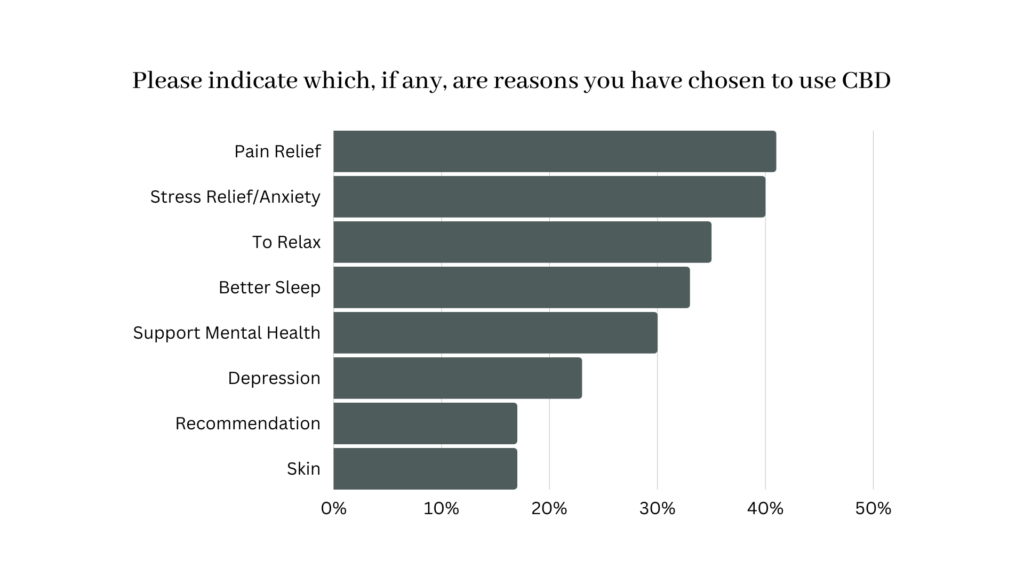
In 2019, a study found that out of 229 CBD users, the main reason for using CBD was pain relief, closely followed by stress relief and anxiety.

chart indicating reasons for taking CBD

Why not try incorporating elénzia Pure CBD™ into your daily routine to enhance your inner peace? 

When stressed, we tend to forget the things that make us happy, which adds more pressure, but by actively managing stress levels, we can lead a more fulfilling and meaningful life.
Remember to take small steps each day towards finding joy and treat yourself with kindness and compassion.

#ACTNOW on your stress management by prioritising your wellbeing and embracing the joys of life.

Further resources on stress management include:
NHS – Mental Health
NHS – Every Mind Matters
Mind – Information Support

Our 5 Step Wellness Cycle

August 31st said goodbye to wellness month but we want to keep the discussion going on why focusing on wellness all year round should take priority and how it can be incorporated into your day-to-day life.

The pursuit of wellness is one of the most important and rewarding endeavours you can embark upon. Living in a state of wellness can dramatically improve your relationships, happiness, and overall sense of meaning in this world.

But why do we find it so hard to achieve? Or once we do, why is it so hard to hold on to?

Wellness does not happen overnight. There is no magic button you can press or pill you can take. It starts within you. It starts in the mind and results in the body, and we want to share with you the holistic wellness equation to achieving eudaimonia:

healthy habits + precision nutrition = eudaimonia

Eudaimonia stands for human flourishing, a contented state of being happy, healthy and prosperous. In simple terms this means reaching a state of sustained, lifelong, holistic wellness. elénzia is here to help with achieving and sustaining eudaimonia, holistically.

If you’ve read our previous blog on wellness “four ways to achieve wellness” you’ll be familiar with how the elénzia approach is a holistic approach to supporting your wellness goals. Your journey to wellness following this equation is possible with our support, the precision nutrition we offer and simplified efficacious guidance.

What do we mean by a holistic approach and why is it necessary for sustaining eudaimonia?

By ‘holistic you’ we mean your approach should be all-encompassing – we are intimately interconnected and only by treating the entire you, considering mental and social factors, rather than just the symptoms of weakness or limitations, will you reach a state of eudaimonia.

We believe that only by achieving this holistically can you sustain it in the long-term, reaching your state of eudaimonia and being your best you.


The elénzia wellness cycle

To inform you on how we can support this lifelong wellness journey for now and the future, we’ve created the elénzia wellness cycle, showing how our precision nutrition range can enhance your mental and physical functioning holistically.

This is based on the science of the natural circadian rhythm, meaning our body’s natural connection with light. This is how humans have evolved to become active during the day and naturally crave sleep during the night. We are all different, however, meaning you need to decide where wellness fits in with your routine and how you can maintain those healthy habits.


1. Kick-start your day and enhance your brain

Holistically kick-start your mental clarity and improve your natural alertness to prepare your mind for the day ahead.

Around 7am our sleep hormones aka melatonin turn off and alert hormones, aka Cortisol the stressor hormone, turns on.

elénzia Enhance™ can help the brain holistically process this stress hormone and prepare the mind to think clearly, recalling information and reacting to the tasks ahead (2,3)


2. Reduce the impact of stress on your immune system

Holistically process your stress hormones to a manageable state so that adrenaline doesn’t impact your immune function for the rest of the day ahead.

Around 11am our stressor hormones are meant to fade off, elénzia Immunity™ contains botanicals shown by research to help reduce acute stress, which is the kind of stress you feel before you are about to present or when you have a deadline to meet.

The formulation of elénzia Immunity™ helps you to bring your cortisol levels down holistically. This improves immune function combined with clinically trialled nutrients required for a healthy immune system (2,4).


3. Boost your overall skin health with hydration & protection against UVA and UVB

Holistically process your stress hormones to a manageable state so that adrenaline doesn’t impact your immune function for the rest of the day ahead. Enhance your topical skin care by providing your body with clinically proven inner protection to support your skin’s defences from pollution and UV rays, with additional essential nutrients for improved collagen production to reduce signs of skin ageing.

Ensure your lunch contains efficient proteins to sustain balanced blood sugars and satiety, combined with elénzia Skin™ to help protect, repair, and hydrate your skin for the day (5,6).

Supplement elénzia Endurance™ to prepare the liver for the processing of nutrients and their conversion into energy and balanced blood sugar levels (7).


4. Restore your body, gut and collagen

Holistically support the muscle and skin reparation from the intense day whilst simultaneously preparing for the next.

Our muscle strength and cardiovascular efficiency is suggested to peak around 5pm. If you’re an after work active, take elénzia Restore™ before or just after your workout and help the body to restore the collagen for repair and skin hydration (8).


5. Aim for 8 hours of sleep, ready for the cycle to start again

8 hours of sleep makes you more efficient and alert to sustain being the best version of yourself.

When we sleep, the body and brain clear out harmful toxins, your mind organises new information and solidifies new memories, your muscles repair, collagen restores itself and your liver rejuvenates itself.

Remember we are all different so the timings of each step may differ for you, however, the key points to consider are the holistic factors they support. Whether your rise ‘n’ shine pattern is 9, 10, or 11am, look and consider how you can take on a holistic wellness approach and how this would benefit you…

Like Oscar Wilde says: “Be yourself; everybody else is already taken”…


References:

5 Ways to Feel Body Confident

As we emerge from lockdown and reach the long-awaited summer months, we rejoice in the thought of being able to dust off our summer wardrobe, get on a plane (hopefully!)  and cover ourselves in SPF. However, after over a year of no holidays and a very long winter, it’s likely that we all need to up our skincare game when it comes to our bodies.

According to market researcher NPD Group, during the pandemic body serum sales grew by 32%, and body exfoliator sales grew by 15%, suggesting that lockdown has allowed us to spend more time on our self-care regimes to include the body – meaning our overall skin health is going in the right direction.

However, despite the increased time we seem to be spending on self-care and body care regimes, it has been reported that over half of adults in the UK feel worse about their body image after lockdown. In this blog post we look at some key tips for you to feel summer ready with your body care and overall skin health to allow you to be body confident and feel empowered to take action to do what makes you feel comfortable, confident and healthy in your own skin.


5 Ways to Feel Body Confident this Summer

1. Exfoliate

Whether it’s to prep for your glowing fake tan or to get silky smooth skin, this should form the first stage of your body care routine.


2. Banish the Orange Peel

80% of women in the UK develop cellulite during their lives. Although it’s very common and natural, many women – and men! – choose to look for solutions to reduce its appearance. The best starting point for this is to invest in an anti-cellulite cream with clinically proven ingredients so that you know it can provide real results. Gone are the days of anti-cellulite creams only containing caffeine to stimulate the skin, more sophisticated body claims are increasing in the market so make sure that you do your research to choose one that you feel confident is going to provide true results.

The alternative for faster, more enhanced results, is to opt for one of the many popular non-invasive professional treatments available at aesthetic clinics around the country. The Endor Technologies Celltense Treatment is clinically proven to reduce the appearance of cellulite with no pain, no downtime and fantastic results.


Interested in a treatment consultation? Head to our clinic finder page to find your nearest clinic.


3. Enhance Your Workouts

Not only does exercise help your physical and mental health, it also helps increase the flow of oxygenated blood around your body – giving you that perfect after work-out skin glow. Add the Endor Technologies Firming and Body Shaping Cream to your daily body care routine to help boost your work-outs and help get rid of difficult pockets of fat.


4. Don’t forget the SPF!

A sunscreen product with UVA filters and an SPF of at least 25 should be used (we would recommend an SPF of 50). You should apply sunscreen 30 minutes before you go out, and make sure to reapply it regularly throughout the day. Use 1 teaspoon full of product for the face and neck, 2 teaspoons to cover your face, arms and neck, and 2 tablespoons if you’re covering your entire body while wearing a swimming costume (NHS guidance).


5. Embrace your body

Finally, the most important one – embrace your body! No matter what shape or size you are, be proud of your beautiful, healthy skin and do everything that you can to make sure that it stays in the best condition possible continuing to include your body in your daily skincare routines.

A Holistic Guide to Improving Liver Health

Explaining to your clients why supporting their liver health is so important can be lengthy. In short, you can highlight how the liver is responsible for billions of vital enzymatic functions and biological processes occurring every second of every day, impacting how your clients look, feel, function and age.

But a key component is fat. To be precise hepatic fat. Too much of this and those billions of cellular processes that occur simultaneously which rely on the liver are thrown off balance – and one thing we know about the body is it likes to be balanced (A.K.A homeostasis).

The NHS refers to a high content of hepatic fat within the liver as non-alcoholic fatty liver disease (NAFLD) and suggests it’s affecting every 1 in 3 people in the UK.

This predominantly effects anyone who experiences high cholesterol or a metabolic syndrome, for example, T2D or diabetes, high blood pressure or obesity, but is not limited to these factors. However, since hepatic fat lurks in the liver it is technically an invisible fat that affects people of all shapes and sizes, meaning it is not just associated with a high BMI or waist to hip ratio. Event athletes must be cautious of a high hepatic fat content. Common signs of an unhealthy liver are fatigue, headaches, allergies, bad breath, skin problems, low mood and weight gain.

This article is a reminder to all health professionals on liver function, which compounds are good and which are bad and how through precision nutrition and lifestyle tips you can support your clients taking the elénzia holistic approach to improve liver function.

Why is the liver so important?

The liver is one of the largest and most important organs in the body. A few of its main functions are:

  1. Metabolic — glucose homeostasis
  2. Synthetic — interconversion of nutrients, binding protein for iron, copper and vitamins
  3. Storage — of vitamins and minerals, glycogen, and lipids
  4. Catabolic — detoxification, phagocytosis [bacterial metabolism], hormones, synthesis of blood components
  5. Excretory — bile production


Its main role – DETOXIFICATION

A key role of the liver is detoxification. Substances ingested or produced by the body (a by-product of metabolism) will eventually get filtered through the liver in two phases:

Phase I

The first phase is where the body draws in stored fat-soluble toxins from the body’s tissues. These toxins enter the body (via food, mouth, nose or skin) and if allowed to pass the barrier of the intestine make their way into the bloodstream. They are the last thing you would ever want to float around in the cardiovascular system and therefore they are stored away in fat, nerves, brain, and kidney tissues until they can be properly and safely disposed of.

Phase II

Phase II is where the body takes these toxins and prepares them for their exit; a water molecule is added to each fat-soluble chemical allowing them to depart the body safely.

What gets detoxified?

Phase I

Phase I detoxifies drugs such as: codeine, warfarin, prednisone, steroids and alcohol. For these toxins to be cleared out certain nutrients are required – for example, copper, magnesium, zinc, vitamin C, molybdenum, antioxidants and bioflavonoids. Further, the phase I process is activated or inhibited by certain foods, compounds or substances and these need to be balanced.

Foods and other things that turn on Phase I (Activators)

Broccoli, cabbage, brussels sprouts, caraway, dill seeds, oranges, tangerines, vitamin B1, niacin, vitamin C, charbroiled meats, alcohol, nicotine, some drugs, chemicals, dioxin, pesticides.

Foods and other things that turn off Phase I (Inhibitors)

Drugs including antihistamines, stomach acid blockers, ketoconazole, naringenin (from grapefruit juice), turmeric, green tea, red chilli pepper, clove oil, onions (quercetin), calendula, milk thistle, ageing, hypothyroidism, toxins from inappropriate intestinal bacteria.

The liver must function in a balance. If Phase I is functioning either too quickly or too slowly its detox potential will not be there and instead of filtering chemicals out of the body they will be absorbed back into the body’s cells. To help your clients assess if Phase I is functioning optimally you can recommend they try a caffeine clearance test.

Phase II

Phase II is the second part of liver detoxification. This is where the liver detoxifies drugs such as: paracetamol, nicotine, caffeine, pesticides, epoxides, aspirin and benzoates. Again, for these toxins to be cleared out certain nutrients are required – for example, glutathione, vitamin B6, glycine, SAMe, methyl groups, molybdenum, cysteine and acetyl CoA etc. Further, the Phase II process is activated or inhibited by certain foods, compounds or substances and these need to be balanced.

Foods and other things that turn on Phase II (Activators)

Brassica family foods, limonene (found in the peel of citrus fruits, as well as herbs dill and caraway), glycine, methyl donators, taurine and fish oils, birth control pill and some drugs.

Foods and other things that turn off Phase II (Inhibitors)

A deficiency of glutathione, folic acid, Vitamin B1, B2, B5 and B12, selenium or zinc. A diet low in protein.

The liver will do its best to break down toxic substances into less toxic forms that can be easily eliminated from the body. However, if one of the phases of detoxification is working either too quickly or too slowly due to deficiencies in nutrients, an imbalanced diet or a high intake of medication, many of the toxins that enter the body will not be cleared out properly and those that cannot be eliminated will be stored in the liver and in other tissues throughout the body.

Phase I and II combined

If Phase I is moving too quickly and Phase II is working too slowly, it will not be able to keep up with the demand of Phase I and some toxins may be let into the body, the same can occur if Phase II is working faster than Phase I, as it may not process chemicals as effectively. Again, you can recommend clients try a caffeine clearance test to assess how well their liver is functioning across both phases.

How to improve liver function

It is said that life depends upon the liver! The liver does many functions like storing nutrients, cleansing the blood, and managing the cholesterol. However, as mentioned the one thing that slows this all down is its fat content. Too high and those all-important Phases I and II are thrown off track. This makes it very important for the overall health of the body.

Fortunately, there are some foods and nutritional compounds that can a) help you keep the fat content low and b) support Phases I and II. For example, highly potent nutritional compounds such as astaxanthin have been shown to target, repair and prevent tissue damage which will assist the liver in detoxification.  Other foods that have ample amounts of magnesium, folate, iron, flavonoids and vitamins reduce the risk of deficiency in the essential nutrients required for the indirect processes supporting enzymatic detoxification processes. Further, some botanical compounds such as thymoquinone – the potent active compound found in black seed oil – can help to convert hepatic fat cells to be utilised as energy.

Naturally, the combination of all these components makes up the perfect recipe to support liver detoxification process which in turn supports overall health.

How to ensure your clients follow the perfect liver health recipe

Below we list some of the recommendations you can offer clients whose liver need some TLC.

Healthy habits for a healthy liver:

  • Chew your food properly and don’t just swallow it
  • Do not have food that does not go well with your liver
  • Cut down on coffee and tea intake
  • Try to drink an adequate amount of water
  • Avoid using antibiotics and antacids as far as possible
  • Cut down on the sugar and salt intake to keep your body healthy
  • Go slow on alcohol
  • Quit smoking
  • Take up some form of exercise like yoga. Certain twist positions in yoga are designed purely to enhance blood flow to and from the liver improving its function.
  • Ensure adequate good quality sleep. The liver works the hardest between 11pm and 3am. Therefore, it is best to supplement for your liver immediately after an evening meal which ideally should be no later than 6pm.
  • Reduce stress and cortisol levels. Stressors vary from person to person but stress effects the liver all the same. Therefore, reducing stress is key to improving liver health so advising people to try meditation, or breathing exercises is always a good start and removing what triggers stress away from their daily life. Trying apps such as Calm or Waking Up is always a good start.

Supplementing botanicals to support a healthy liver which are hard to source through diet alone: 

  • Try a daily dose of milk thistle, echinacea or dandelion root. All these supplements are said to help clean the blood.


List of foods to incorporate in diet plans for your clients:


Cruciferous vegetables

Some common cruciferous vegetables are broccoli, cauliflower, brussels sprouts, cabbage etc. They are strong detoxifiers of our liver as they contain certain chemicals which neutralize toxins. They also help in the production of enzymes needed for detoxification.

Beetroot

Beetroot should be included in the diet for a healthy liver. It contains blood-purifying properties to clean the blood and absorb any heavy metals.

Onions and garlic

Garlic has allicin which is needed for detoxification by the liver. It helps the liver to get rid of the mercury, oestrogen and food additives. Onions and garlic are also very good at supporting the liver around the menstrual cycle.

Apples

Apple has pectin which binds itself to the heavy metals and helps in their excretion. This reduces the burden on the liver.

Lemon juice in hot water

Lemon juice provides a large quantity of vitamin C and influences the production of bile. By increasing the bile flow the liver becomes more effective in cleansing the blood and removing unwanted substances.

Artichoke

Artichoke also increases the bile production. Bile removes the toxins and harmful micro-organisms from the body through healthy bowel movement.

Fruits with high anti-oxidants

Like astaxanthin, anti-oxidants from fruits protect the liver from the free radicals which are produced during the detoxification. These free radicals are harmful to the body. Some suggested fruits are prunes, blueberries, plums, oranges, pears, cantaloupes etc.

Bitter salad greens

The bitterness present in the leafy greens helps in the stimulation of bile in the liver. Some bitter salad greens are chicory, dandelion, endive etc. All the above-given foods should be a part of a diet for a healthy liver.


For more information on helping your client’s liver health, one to one product training or client case study training, feel free to get in touch at christie@elenzia.com.


References

  1. Marieb, E.N. (2012). Essentials of Human Anatomy and Physiology (10th ed). San Francisco, CA: Pearson Education, Inc.
  2. Regan, J., Russo, A., Seeley, R., & Van Putte, C. (2011). Seeley’s Anatomy & Physiology (9th ed). New York, NY: McGraw-Hill Companies Inc.
  3. Demeda, P. (2014). Lecture on Clinical Detoxification. Personal Collection of P. Demeda, Institute of Holistic Nutrition, Mississauga Ontario.
  4. Holford, P. (2004). The Optimal Nutrition Bible. London: Piatkus.